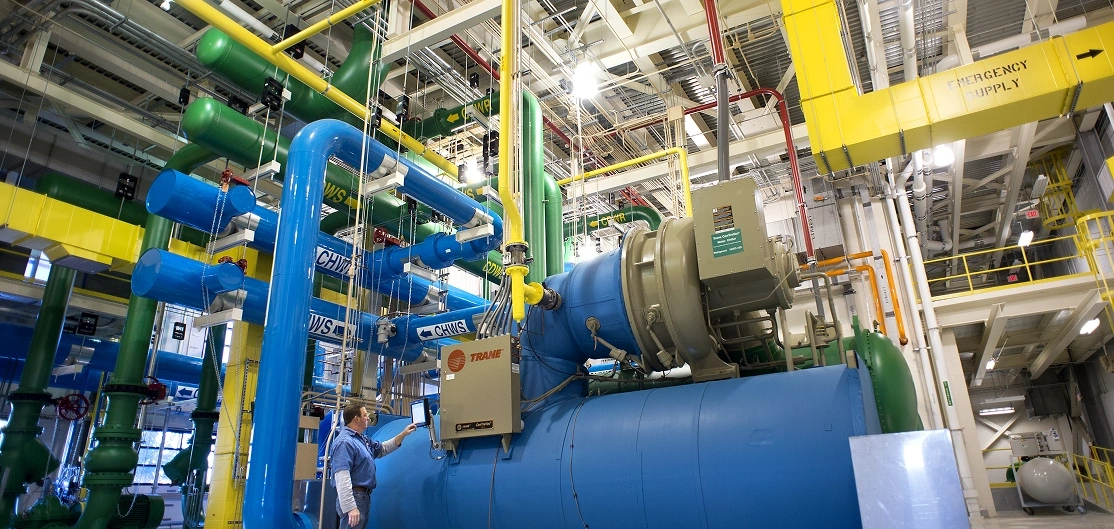
Industrial facilities run on precision and efficiency. One system that often works quietly in the background but plays a critical role in maintaining these standards is the chilled water plant. Chilled water plants deliver the cooling power needed to keep operations smooth, safe, and productive.
What Are Chilled Water Plants?
A chilled water plant is the centralised cooling system that produces cold water and distributes it throughout a facility. The role of the chilled water is to remove heat from industrial processes, equipment, and spaces. The system relies on chillers, pumps, and heat exchangers to maintain the right temperature for production.
These plants are essential parts of HVAC-R systems for industrial processes and ensure that both machinery and working environments remain within safe operating temperatures.
Chilled Water Plants in Industrial Applications
The range of chilled water plants for industrial applications is broad.
- Manufacturing
Cooling equipment, tools, and finished products to maintain quality. - Food & Beverage
Keeping processing lines at regulated temperatures to meet safety standards. - Pharmaceuticals
Controlling production environments for sensitive chemical and medical processes. - Data Centres
Managing heat loads from servers and IT infrastructure. - Chemical Plants
Regulating reaction processes that require precise temperature control.No matter what the industry is, the ability to maintain consistent cooling is a competitive advantage.
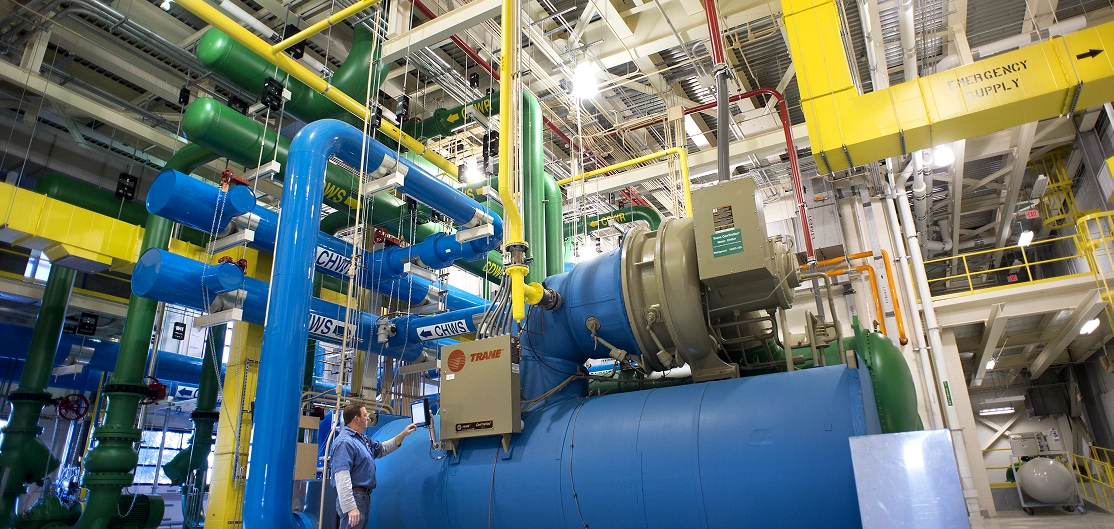
Importance of Chilled Water Systems
The benefits of chilled water systems in manufacturing lie in their ability to keep production stable. Overheated machinery can lead to premature wear, defects, downtime, and costly repairs. In sectors like pharmaceuticals or electronics, even small temperature fluctuations can compromise entire batches of products.
While the primary goal is process cooling, these systems can also improve working conditions. In some facilities, the chilled water network also supports air conditioning, helping to keep employee areas comfortable during high-load operations. That’s not just a comfort perk; a cooler workplace can improve concentration and reduce fatigue. The steady climate control supports both operational performance and staff well-being. It serves as a critical investment for any industrial facility.
How Chilled Water Plants Work in Industrial Operations
A chilled water plant is designed with a basic idea: to remove heat from where it’s not wanted and release it somewhere it can’t cause problems. The system starts with chillers, which cool water to a set low temperature. The chilled water is then pumped through insulated pipes to different parts of the facility.
As the water flows through the equipment, air handlers, or cooling coils, it takes in heat from the machinery or the surrounding space. The warmed water returns to the plant, where it passes through the chiller again, and the cycle repeats.
For many facilities, the process doesn’t stop there. A cooling tower often works alongside the chiller to help remove excess heat, especially in the larger systems. Pumps, valves, and control panels keep the flow balanced and the temperature within the tight limits.
The constant circulation means that cooling is always available when and where it is needed. It is a behind-the-scenes process, but without it, many industrial operations would quickly grind to a halt.
Modern Industrial Cooling Solutions
Today’s modern industrial cooling solutions are more efficient and sustainable. Automation allows real-time monitoring of temperatures, flow rates, and energy consumption to ensure the system runs at peak efficiency. Facilities are also moving towards eco-friendly refrigerants and designs that minimise water consumption.
Another key trend is the integration of cooling systems with broader facility management platforms. It usually allows operators to see how the chilled water plant interacts with other systems, such as ventilation and power supply. It helps in making adjustments to improve the overall performance of the system.
Designing a Chilled Industrial Water Plant for Success
The process of designing industrial chilled water plants starts with understanding the cooling load along with operational patterns and future expansion needs. Engineers who are developing the system consider process temperatures, redundancy requirements, and space constraints to create a system that is both reliable and flexible.
A well-designed system will have:
- The right chiller capacity for current and future demand.
- Efficient piping layouts to minimise energy loss.
- Quality insulation to prevent temperature drift.
- Backup systems for critical operations.A well-planned design meets today’s requirements and leaves room for the plant to evolve with future demands.
Conclusion
Chilled water plants do far more than provide cooling. They help to maintain product quality, safeguard machinery, and keep operations running smoothly.
At BRAVO Electrical & HVAC, we see an energy-efficient cooling system as a vital part of industrial performance. In a competitive market, having the right system can be a real advantage.